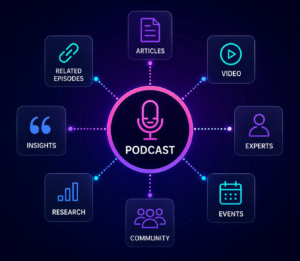


Maximize Your Online Presence with These Podcast SEO Tips and Best Practices.
Podcast SEO is the process of optimizing your podcast so it can be discovered through search engines like Google, podcast platforms, and increasingly AI-powered search tools. It goes far beyond writing catchy episode titles.
Effective podcast SEO includes creating dedicated episode pages, writing detailed show notes, publishing transcripts, structuring metadata, targeting relevant keywords, and building internal links that help search engines understand your content.
When done well, podcast SEO turns each episode into a searchable asset that can drive consistent organic traffic long after the episode is published.
This guide is designed for marketers, brand teams, and podcast producers who want their show to be easier to find online. Below, you will learn practical podcast SEO strategies including how to research keywords, structure episode pages, optimize transcripts, and improve discoverability across both traditional search engines and emerging AI search platforms.
Definition: What is podcast SEO?Podcast SEO is the process of optimizing your podcast so it can be discovered through search engines like Google, podcast platforms, and increasingly AI-powered search tools. It goes far beyond writing catchy episode titles. Effective podcast SEO includes creating dedicated episode pages, writing detailed show notes, publishing transcripts, structuring metadata, targeting relevant keywords, and building internal links that help search engines understand your content. When done well, podcast SEO turns each episode into a searchable asset that can drive consistent organic traffic long after the episode is published. This guide is designed for marketers, brand teams, and podcast producers who want their show to be easier to find online. You will learn practical podcast SEO best practices, including how to structure episode pages, optimize transcripts, and improve discoverability across both traditional search and emerging AI search tools. |
Why does podcast SEO matter?
Podcasting is a powerful content format, but audio alone is difficult for search engines to interpret.
Without supporting content, your podcast episodes may remain largely invisible in search results. Podcast SEO solves this problem by turning each episode into an indexable web asset.
Strong podcast SEO can help:
-
Increase organic traffic to your website
-
Improve discoverability for individual episodes
-
Support your broader content marketing strategy
-
Extend the lifespan of your podcast content
-
Improve visibility in AI-generated search results
Instead of disappearing into a podcast feed, optimized episodes can continue attracting new listeners months or even years after they are published.
How To Boost Your SEO With Branded Podcasts
Podcast SEO can be a game-changer for your brand. By creating search-engine-optimized podcast content, you not only improve the performance of your series but also drive significant traffic to your website, increasing conversions and boosting your online presence. Here are some effective strategies to optimize your podcast for SEO.
1. Prioritize keyword research for your podcast
Keyword research is the foundation of podcast SEO. The goal is to identify the topics your audience is already searching for and align your episodes with those interests.
Start by identifying keywords related to your industry, audience challenges, or areas of expertise. Tools like Google Search Console, Ahrefs, and SEMrush can help uncover common search queries.
For podcast content, it is often helpful to focus on question-based searches and long-tail keywords. These reflect how people naturally search for information.
Examples include:
-
how to build a podcast audience
-
podcast marketing strategies
-
how to grow a branded podcast
Each episode can then focus on a specific keyword or topic cluster.
For example, the wellness brand Saje Natural Wellness produces a podcast called Well Now that explores broader health and wellness topics. Because the subject matter extends beyond specific products, the podcast must target wider search themes such as mindfulness, stress management and holistic health.
The key is to align your podcast content with topics that your audience is already researching online.
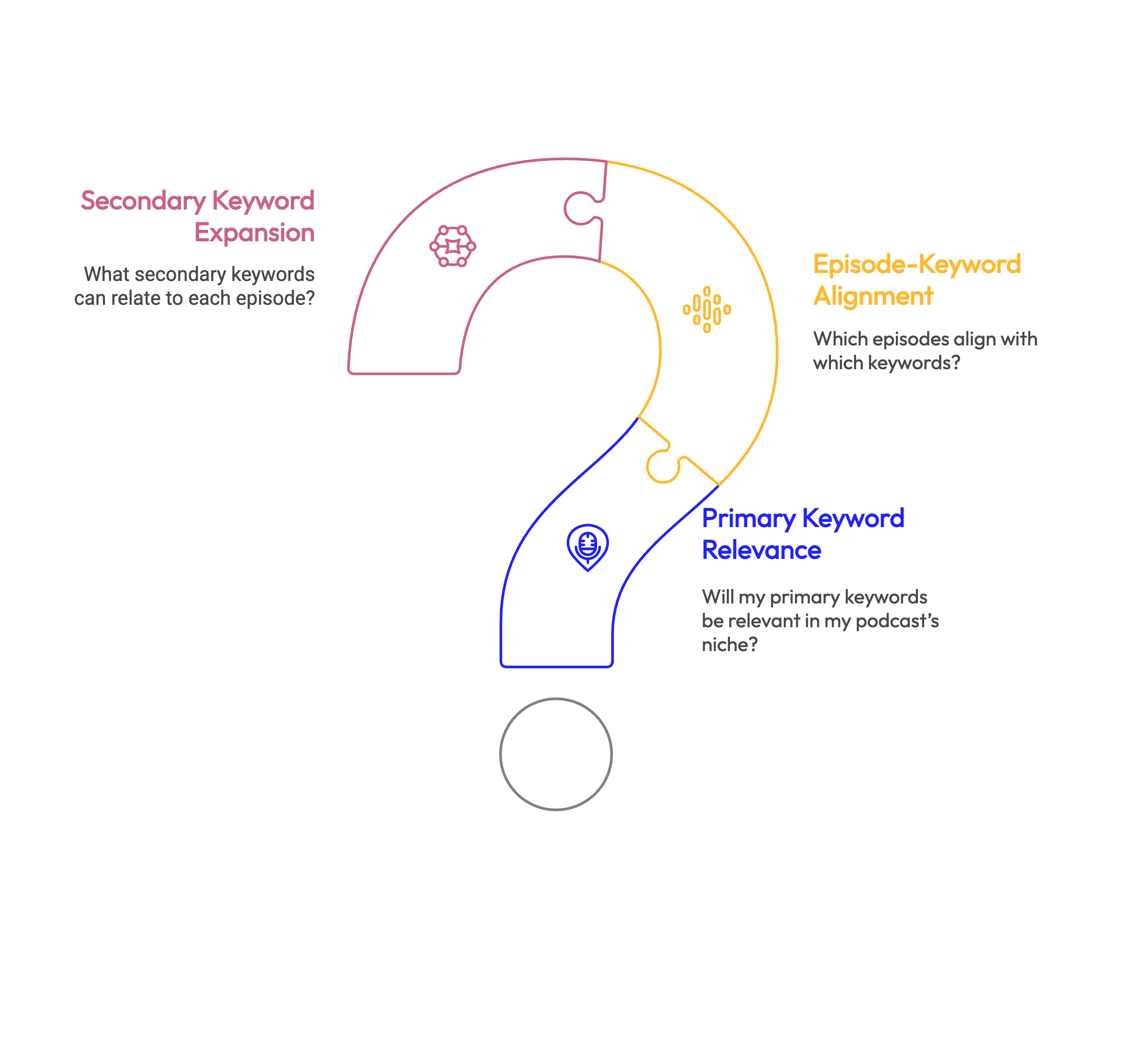
Questions to guide your keyword strategy
2. Optimize podcast episode titles and descriptions
Episode titles and descriptions are critical for podcast SEO because they provide the first signal to both search engines and listeners about what an episode covers.
Effective podcast titles should balance clarity with discoverability. Instead of vague titles, aim for descriptive phrases that reflect the episode’s topic.
For example:
Weak title = Episode 14: A conversation with Sarah
Optimized title = How to build a podcast audience with Sarah Smith
Descriptions should also include relevant keywords and provide context for search engines. A strong episode description might include:
- A short summary of the episode topic
- Key questions discussed in the conversation
- Important takeaways for listeners
- Relevant keywords and phrases
This additional context helps search engines better understand the content and improves the chances of your episode appearing in search results.
3. Embed Each Episode
Embedding your episodes on their corresponding pages rather than linking to them directly can significantly boost your SEO. Embed codes from your podcast host will allow search engines to access important metadata, including:
- Show title
- Episode name
- Episode number
- URL
- Show notes (including SEO content)
4. Transcribe Your show notes for SEO
Transcripts are one of the most powerful tools for podcast SEO.
Because search engines cannot easily interpret audio, transcripts provide the text-based content needed to understand the discussion within an episode.
Publishing transcripts can help:
- Increase keyword coverage on your episode pages
- Improve accessibility for people with hearing impairments
- Support AI search engines that analyze written content
- Provide additional material for internal linking
Detailed show notes serve a similar purpose. They summarize the key ideas from an episode and create additional crawlable content that search engines can index.
Many podcast producers use transcription tools such as Rev or Descript to automate this process.
5. Structure podcast pages for search
One of the most important podcast SEO practices is creating a dedicated webpage for every episode.
These pages give search engines a place to crawl and understand your content.
A well-structured podcast episode page should include:
- A clear headline that reflects the episode topic
- An embedded podcast player
- A written episode summary or introduction
- Detailed show notes
- A transcript of the conversation
- Images with optimized alt text
- Links to related episodes or resources
Ideally, each episode page should include at least 300 to 800 words of written content to provide enough context for search engines.
Embedding the episode player rather than linking externally also helps preserve SEO value by keeping traffic on your website.
Podcast SEO best practices to improve discoverability
Beyond basic optimization, several best practices can further improve the discoverability of your podcast.
Create topic clusters
Instead of isolated episodes, organize your podcast around recurring themes that connect related topics.
Link between episodes
Internal links help search engines understand the relationship between your content and guide listeners toward additional episodes.
Optimize podcast metadata
Ensure that your show title, episode titles, descriptions, and categories are consistent across podcast platforms.
Use consistent naming conventions
Clear and descriptive titles make it easier for listeners to understand what your podcast offers.
Promote episodes through other content
Podcast episodes can also be repurposed into blog posts, articles, or social media clips that generate additional search visibility.
Common podcast SEO mistakes to avoid
While podcast SEO can be highly effective, several common mistakes can limit its impact.
Relying only on podcast platforms
Publishing episodes exclusively on podcast directories means you miss the opportunity to generate search traffic through your website.
Using vague episode titles
Creative titles may sound interesting but often fail to communicate what the episode is about.
Skipping transcripts
Without transcripts or detailed show notes, search engines have little context for understanding your episode.
Creating thin episode pages
Short pages with minimal text provide limited SEO value.
Ignoring internal linking
Connecting episodes through related content helps both users and search engines navigate your podcast library.
5 Key Takeaways on Podcast SEO
Podcast SEO is not just about titles or descriptions. It requires a broader content strategy that makes your podcast easier for search engines to understand.
By combining keyword research, detailed episode pages, transcripts and strong metadata, you can turn each podcast episode into a searchable asset that drives ongoing traffic to your website. So:
- Prioritize Keywords: Align your podcast content with your existing SEO strategy, focusing on relevant primary and secondary keywords.
- Create Episode Pages: Develop individual webpages or blog posts for each episode to provide crawlable content for search engines.
- Embed Episodes: Use embed codes to include episodes on their respective pages, allowing search engines to read important metadata.
- Transcribe Episodes: Enhance SEO and accessibility by including transcripts with each episode.
- Maintain Content Quality: Ensure that your SEO strategy does not compromise the quality of your content, prioritizing reader and listener experience.
Frequently asked questions about podcast SEO
What is podcast SEO?
Podcast SEO is the process of optimizing your podcast so it can be discovered through search engines, podcast platforms, and AI-powered search tools. It involves more than just episode titles. Effective podcast SEO includes creating dedicated episode pages, writing detailed show notes, publishing transcripts, optimizing metadata, targeting relevant keywords, and building internal links. These elements help search engines understand your podcast content and match it with relevant search queries.
Does podcast SEO really work?
Yes, podcast SEO can significantly improve the visibility of your podcast and drive organic traffic to your website. When episodes are supported by optimized pages, transcripts, and keyword-focused content, search engines can index and surface that material in search results. This allows podcast episodes to attract new listeners long after they are published, turning each episode into a long-term discovery asset rather than a one-time release.
How do I optimize a podcast for Google?
To optimize a podcast for Google, focus on creating searchable content around each episode. Start by identifying relevant keywords for your topic, then create a dedicated episode page that includes a descriptive headline, an embedded audio player, written show notes, and a transcript. Add internal links to related content and ensure your images include optimized alt text. These elements provide the context search engines need to understand and rank your podcast content.
Do podcast transcripts help SEO?
Yes, transcripts can significantly improve podcast SEO. Search engines cannot easily interpret audio files, so transcripts provide the text content needed to understand what an episode covers. Publishing transcripts increases keyword coverage, improves accessibility, and creates additional indexable content for search engines and AI search tools. Transcripts also give readers the option to quickly scan an episode before deciding to listen.
What are the most important podcast SEO best practices?
Some of the most important podcast SEO best practices include conducting keyword research for episode topics, creating dedicated episode pages on your website, writing detailed show notes, publishing transcripts, optimizing episode titles and descriptions, and linking related episodes together. When combined, these practices help search engines understand your podcast content and improve its discoverability across both traditional search engines and emerging AI search platforms.