
with Steve Pratt, Author of the hit book Earn It
CASE STUDY

Company size
Website
What if your podcast only needed to reach a few thousand people to be successful?
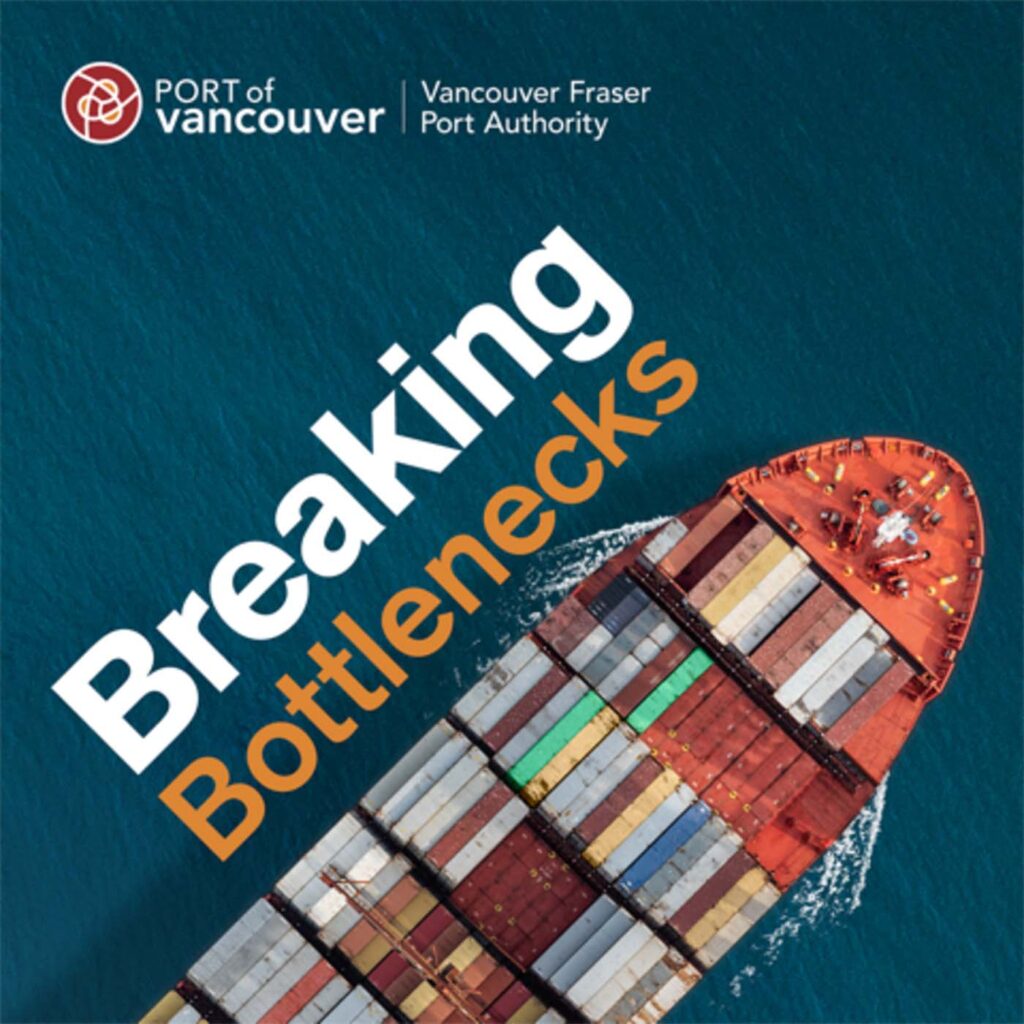
That’s the thinking behind Breaking Bottlenecks, the podcast we created with the Port of Vancouver.
The Port wanted to connect with senior leaders across shipping, logistics, transportation and supply chain.
A valuable audience. But a relatively small one.
We built the show and its audience growth strategy around reaching those people, giving them something genuinely useful and measuring whether they listened.
The result was 75% of the defined target audience reached, with 95% average episode listen-through.
It’s a good example of what a B2B podcast can accomplish when you know exactly who it’s for.
Most people don’t spend much time thinking about how the things they buy actually get to them.
Until something goes wrong.
A snowstorm shuts down a railway. A container ship gets delayed. Traffic backs up near a terminal. Suddenly, a problem in one part of the supply chain starts affecting businesses thousands of kilometres away.
The Port of Vancouver sits at the centre of that world. As Canada’s largest port, it connects businesses and communities with markets around the globe.
And the system is complicated.
Ships, railways, trucks, terminals, cargo owners, governments and communities all have a role to play. Keeping everything moving takes an enormous amount of coordination.
The Port wanted to have better conversations about those challenges with the people working inside the system.
Senior leaders in shipping, logistics, transportation, supply chain and port operations.
These weren’t people who needed an introduction to how global trade works.
They knew the industry. They understood the problems.
What they needed was a useful conversation about what was changing, what was getting in the way and how organizations were responding.
There was also an interesting marketing challenge.
The Port’s target audience was relatively small. A conventional podcast campaign built around generating as many downloads as possible wouldn’t necessarily reach the people who mattered.
We needed to be much more deliberate about who the podcast was made for, what we talked about and how we got it in front of them.
We worked with Port of Vancouver to create Breaking Bottlenecks, a podcast exploring the challenges that can bring global trade to a standstill.
The idea was to take complicated supply-chain problems and turn them into stories worth listening to.
Hosted by historian and author Aaron Chapman, the series brought together people from across the industry to explore the systems, infrastructure and decisions that keep goods moving.
And sometimes stop them.
Rather than making every episode about what the Port was doing, we opened up the conversation to the wider supply-chain community.
That included railway executives, shipping companies, logistics professionals, government representatives and Port leaders.
The Port was part of the conversation, but the audience’s questions drove the stories.
There are plenty of technical subjects in global trade that could make for a pretty dry podcast.
We wanted to find the stories inside them.
One episode explored how severe weather and a prairie snowstorm can disrupt the movement of Canadian grain.
Another looked at container shipping during the pandemic, when cargo volumes surged and the global system came under extraordinary pressure.
A later episode examined climate change and the work being done across the supply chain to respond to increasingly disruptive weather.
These were all issues the audience understood professionally.
Our job was to bring the consequences, people and decisions to life.
How winter weather can disrupt the movement of Canadian grain, and what it takes to keep goods moving from the Prairies to international markets.
How the pandemic tested the container shipping industry and exposed the relationships that keep the global supply chain working.
The Ultimate Bottleneck: Climate Change
How ports, railways and shipping companies are responding to the growing operational challenges of extreme weather and climate change.
Across the series, we combined research, writing, interviews and audio production to make complicated infrastructure stories accessible without losing the details that made them important.
You can listen to the full series on Apple Podcasts.
Making the podcast was one part of the assignment.
Getting it in front of the right people was just as important.
We developed an audience growth strategy around the specific professional groups the Port wanted to reach.
Senior leaders in logistics, shipping, transportation, supply chain and port operations.
That gave us a much clearer picture of where to look for potential listeners and which messages would be relevant to them.
The paid-media planning considered geographic, occupational, industry and contextual targeting, with a focus on logistics, marine transportation, shipping, ports and supply chains.
We also looked at the content itself.
Would the topic interest the audience? Would the guests add something useful? Would someone working in the industry recognize the problem and want to hear the conversation?
Those questions shaped the editorial as much as the marketing.
The result was a podcast designed for a very specific audience, with a distribution strategy built around reaching them.
Breaking Bottlenecks reached 75% of Port of Vancouver’s defined target audience.
And listeners consumed an average of 95% of each episode.
Those are two numbers I think every B2B marketer should pay attention to.
The first tells us how successfully the podcast reached the people it was designed for.
The second tells us what happened once they pressed play.
For a podcast aimed at a fairly small group of senior supply-chain and logistics professionals, reaching three-quarters of the target audience was a meaningful achievement.
And the 95% average listen-through suggests the content was doing its job once people found it.
We weren’t trying to build the world’s biggest shipping podcast.
We were trying to create something useful for people who work in one of Canada’s most important industries.
At JAR, we use the JAR System to make three decisions before we start producing a show.
What’s the job? Who’s the audience? And what results will tell us whether it’s working?
Here’s how that applied to Breaking Bottlenecks.
The Job
Help Port of Vancouver build stronger engagement with the senior people shaping Canada’s supply-chain system.
The podcast needed to create useful conversations about the issues affecting global trade, infrastructure and transportation.
The Audience
Senior leaders across logistics, shipping, transportation, supply chain and port operations.
A relatively small group, but one with an important role in how Canada’s trade network operates.
The Result
Reach 75% of the Port’s defined target audience, with listeners consuming an average of 95% of each episode.
Those results gave us evidence that the podcast was reaching its intended audience and holding their attention.
They don’t tell us whether the series changed perceptions, influenced policy or improved commercial relationships. Those would require additional research.
But they tell us something important about the content and the audience.
The right people found the show. And they spent time with it.
One of the first questions marketers ask about podcasts is how many downloads they can expect.
It’s a fair question.
But before we get into download projections, I think there’s a better question.
How many people actually matter to your business?
For some brands, the answer is millions.
For others, it might be a few thousand senior decision-makers working in a handful of companies.
Those are very different audiences. And they require different podcast strategies.
Breaking Bottlenecks was built around the second scenario.
We knew who the audience was, what they cared about and why they might want to listen.
That shaped everything from the stories we chose to the guests we interviewed and the way we approached distribution.
It’s also why we believe audience growth needs to start before episode one.
When you know exactly who you’re trying to reach, you can make better decisions about the show.
And you can measure whether those decisions worked.
For Port of Vancouver, that meant reaching 75% of its defined audience while achieving 95% average listen-through.
A useful reminder that the size of your podcast audience is only part of the story.
It’s one thing to say you can make supply chains interesting.
It’s probably better to let you hear it.
Breaking Bottlenecks explores the stories behind the infrastructure, industries and people that keep global trade moving.
From frozen railways to container shortages and extreme weather, the series takes complicated problems and makes them understandable.
Have a listen.
Listen to Breaking Bottlenecks on Apple Podcasts
Port of Vancouver wanted a better way to engage with senior leaders across shipping, logistics, transportation and supply chain.
Rather than producing conventional corporate communications, Breaking Bottlenecks explored the real problems affecting global trade.
The podcast brought together experts and industry partners to discuss infrastructure, supply-chain disruptions and the work being done to keep goods moving.
We worked with Port of Vancouver on podcast strategy, editorial development, research, writing, guest production, audio podcast production, distribution and audience growth.
Our job was to create a show that senior supply-chain leaders would find useful, then develop a marketing strategy to reach those people.
That meant making decisions about the content and distribution based on a clearly defined audience.
Breaking Bottlenecks reached 75% of Port of Vancouver’s defined target audience and achieved 95% average episode listen-through, according to JAR’s case study reporting.
The first figure measures how effectively the podcast reached its intended audience. The second indicates how much of each episode listeners consumed on average.
Together, they provide evidence of targeted reach and audience engagement.
Start by identifying exactly who needs to hear the show.
For Breaking Bottlenecks, that meant senior people working in logistics, shipping, transportation, supply chain and port operations.
We built the editorial and audience growth strategy around those professionals.
That included choosing relevant topics, bringing credible industry voices into the conversations and developing a distribution plan focused on reaching people in the right roles and industries.
Because the people listening matter as much as the number of people listening.
A podcast designed for senior decision-makers in a specialized industry doesn’t necessarily need a large consumer audience.
It needs to reach people who have a reason to care about the subject.
For Breaking Bottlenecks, reaching 75% of the defined target audience was a more relevant measure of success than pursuing a much larger general audience.
A podcast gives organizations room to explore subjects that are difficult to explain in a short article or social post.
For Port of Vancouver, that meant discussing transportation infrastructure, global supply chains, industry collaboration and disruptions affecting international trade.
By bringing together people with different perspectives, Breaking Bottlenecks made those subjects accessible while keeping the detail that mattered to industry professionals.
Our approach to podcast strategy starts with understanding the audience’s questions and the business job the content needs to accomplish.
You probably have a pretty good idea of who your most important customers, partners or stakeholders are.
The harder question is how to get their attention.
At JAR, we help organizations create podcasts around the subjects their audiences genuinely care about.
We handle the strategy, production, audience growth and measurement, with a focus on what the podcast needs to accomplish for your business.
If you’ve got a specific audience you want to reach, let’s talk about what would make them listen.
Breaking Bottlenecks reached 75% of Port of Vancouver’s defined target audience.
For a show aimed at a deliberately narrow group of senior supply-chain and logistics professionals, that level of penetration mattered far more than chasing a bigger general audience.
Listeners consumed an average of 95% of every episode.
The audience didn’t just find the show. They stayed with it.
The show was designed around senior people working in logistics, shipping, transportation, supply chain and port operations.
That audience shaped the editorial, guest mix, distribution and measurement strategy from the start.
Breaking Bottlenecks brought together voices from across the supply-chain ecosystem instead of turning every episode into a Port of Vancouver message.
That made the show more useful to the people it was built for.