The medium is bigger, more fragmented and harder to define than ever. That may be exactly what makes it more valuable.
Roger Nairn and I co-founded JAR in 2017. Pre-pandemic, pre-tariffs, pre-my-kids-moving-out to go to college, plant trees and fight forest fires.
A lot has happened since then. And if you’re anything like me, you may be reeling just a little.
Wars, fires and crises are affecting our families, our colleagues and the way we do our work. At the same time, there are moments that remind us of what people can accomplish together: international soccer drama on the World Cup stage, or astronauts looking back at our little planet and urging us to recognize how deeply connected we are. And then there’s Jimothy.
We need ideas that help us work together, not pull us further apart.
Meanwhile, the podcast industry has been going through its own near-constant transformation. What began as a largely RSS-based audio medium has become a sprawling, cross-platform audio and video landscape. Independent creators built audiences. Networks arrived. Brands followed. Media companies moved in. AI entered the picture. Some networks contracted or disappeared, and independent creators began building again, often with brands in tow.
All of this has happened alongside massive layoffs and closures in traditional newspapers and radio, the places where I cut my teeth as a journalist.
It’s enough to make a girl feel old.
Roger and I recently admitted to each other that we’re both struggling to capture everything affecting our industry and to separate the buzz from the changes that genuinely matter.

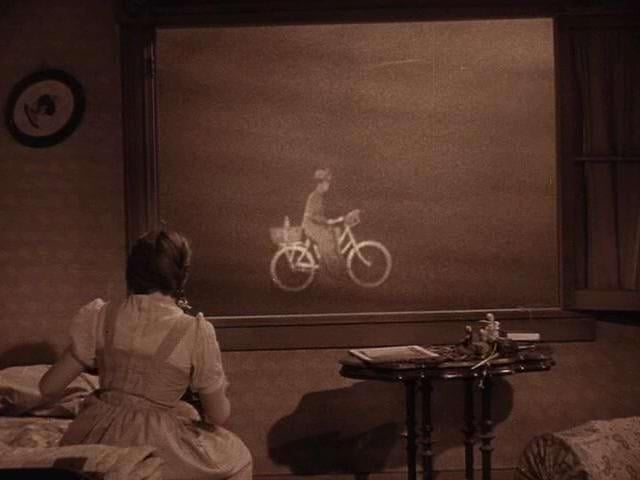
Roger said he feels like he’s in that scene from The Wizard of Oz when Dorothy is trying to save Toto and watches the tornado through her bedroom window. Farm animals, phone booths, and even neighbors are sailing past the window. There are too many things to count, all moving too quickly to understand.
Sound familiar?
If not, good for you. For the rest of us, these are confusing times.
One thing that helped me put this rapid change into perspective was a recent lime margarita on the patio of Havana restaurant on Vancouver’s Commercial Drive. I was there with podcast-industry statistician extraordinaire Paul Riismandel of Signal Hill Insights.
I was blabbing on about the complexity of modern podcasting and was really just getting warmed up when Paul offered a helpful observation.
It’s easy to romanticize the “good old days” of audio podcasting, when Serial and This American Life seemed to be on everyone’s lips. The medium appeared to have greater clarity of form and purpose. Compared with that period, podcasting in 2026 can feel fragmented and difficult to define.
But there is another way to look at it.
Far more people can listen to Season 1 of Serial today than when it first appeared in 2014. The potential audience has expanded enormously. Using the first comparable Canadian figures available, the monthly podcast audience in the United States and Canada grew from roughly 64 million people in 2016 to more than 180 million today. That is nearly three times the audience, even before accounting for Mexico.
In the United States, today’s measurement explicitly includes people who listen to or watch podcasts. That distinction matters, since podcasting is now a dual-format medium.
Once I looked at it that way, the mess started to make more sense.
Of course podcasting has diversified. Of course it now encompasses different formats, platforms and patterns of consumption. Of course people disagree about what makes a great podcast. A medium that reaches more than 180 million monthly consumers should not sound, look or behave like one thing.
The confusion is partly a consequence of success.
Podcasting’s complexity also creates room for more people to participate. A scientist explaining climate research may need a different format from a comedian building a community. An Indigenous storyteller preserving language and history may define success differently from a business trying to reach senior decision-makers. A journalist investigating abuses of power is doing something different from a patient describing what it feels like to live through treatment.
They can all belong here.
That doesn’t make podcasting barrier-free. Producing good work still requires time, resources, skills and access to an audience. But compared with many traditional media systems, podcasting offers more ways in. A creator can begin with audio, video or both. A story can be told through intimate narration, a filmed conversation, documentary reporting, fiction or a short-form clip that leads someone toward a deeper piece of work.
The absence of one dominant model can be disorienting. It can also be liberating.
That is where the complexity of the podcast ecosystem becomes a feature, not a bug.
Podcasting will not end wars, stop forest fires or repair our politics by itself. No medium can do that. But it can help people encounter experiences, expertise and ideas that would otherwise remain outside their view. It can connect scientific knowledge with lived experience, introduce people to unfamiliar communities and give promising solutions enough attention to travel.
That kind of exchange matters a lot, especially right now.
Following the recent Artemis II mission around the Moon, NASA astronaut Christina Koch described what she had learned about being part of a crew:
“A crew is inescapably, beautifully, dutifully linked… Planet Earth, you are a crew.”
@abcnews “A crew is inescapably, beautifully, dutifully linked … Planet Earth, you are a crew.” NASA astronaut Christina Koch addressed the public for the first time since returning from space on the Artemis II mission. #artemisii #christinakoch ♬ original sound – ABC News
If we are a crew, then we are certainly a bickering one. We have a difficult job ahead, and we need to make room for as many thoughtful voices and workable ideas as possible.
That is what gives me hope about podcasting’s messy new era.
It matters less to me whether someone finds a podcast through an RSS feed, Spotify, YouTube or a short video on social media. What matters is whether the work offers something real: a useful idea, an overlooked perspective, a story that changes how someone understands the world or a conversation that helps people find common ground.
The podcast industry may still feel like a house flying through a tornado. But perhaps everything outside the window isn’t debris.
Some of it is possibility.