
with Steve Pratt, Author of the hit book Earn It

CASE STUDY

Company size
Website
lululemon had built a distinctive culture around leadership, personal development, community and wellbeing.
Those values were an important part of the company’s identity.
But as the business expanded, maintaining a shared experience across teams became more difficult.
During the historical project period, lululemon’s workforce had grown from approximately 1,600 to 4,200 employees over six years.
People were joining the company in different cities, countries and roles.
And many of them were increasingly distant from the experiences happening at headquarters.
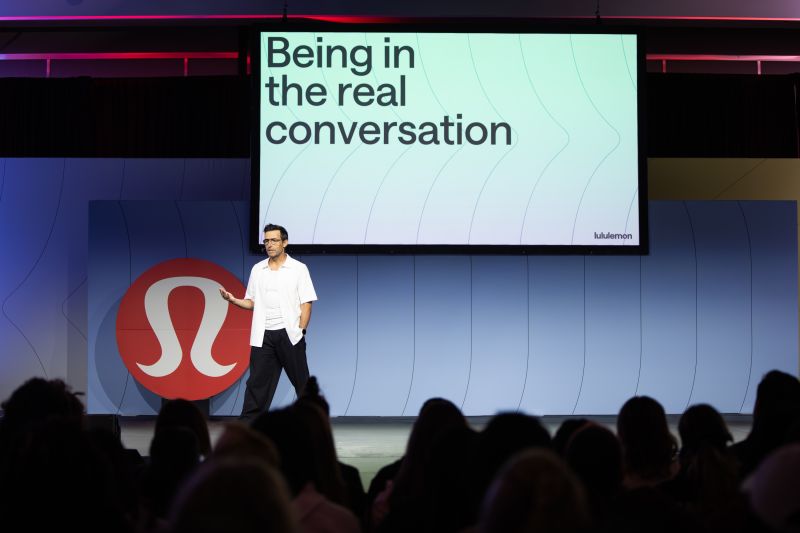
At its Vancouver headquarters, lululemon hosted a popular Speaker’s Series featuring accomplished leaders and inspiring guests.
The events gave employees opportunities to hear new ideas, explore leadership principles and connect with the company’s culture.
But those experiences were largely tied to a physical place.
Employees working elsewhere couldn’t always attend.
They might hear about the event afterward, see photographs or receive a summary.
But that wasn’t the same as hearing the conversation.
For a company investing in a shared culture, that created an access problem.
When an organization is relatively small, culture can travel through direct relationships.
People know the leadership team. They attend the same events. They share experiences.
As the organization grows, that becomes harder.
Employees work across different schedules and time zones.
Retail teams, corporate employees and people in different markets don’t necessarily have the same access to company events.
And traditional internal communications can become another stream of information competing for attention.
lululemon needed a way to make the best content from its headquarters available to more people without requiring them to be present at a particular time.
The audience was already active, mobile and accustomed to consuming content on its own schedule.
Audio offered a practical solution.
Employees could listen while commuting, exercising, preparing for the day or during other appropriate moments.
They didn’t need to watch a screen or attend a scheduled meeting.
A podcast could also preserve something a written event summary couldn’t.
The speaker’s voice.
Their personality.
The nuance behind their ideas.
And the energy that made the original event valuable.
lululemon wasn’t trying to create another public-facing branded podcast.
This was a private communications initiative for employees.
Its purpose was to extend access to leadership content, reinforce shared values and help globally distributed teams participate in meaningful company conversations.
The content needed to feel authentic to lululemon.
And employees needed to see enough value in it to choose to listen.
The challenge wasn’t a shortage of internal content. It was making valuable experiences accessible to the people who couldn’t be there.
That’s the problem JAR helped solve.
JAR partnered with lululemon to create the Speaker’s Series, a private podcast extending the reach of leadership events held at the company’s headquarters.
The concept built on something lululemon was already doing well.
Its speaker events introduced employees to accomplished people, personal development ideas and conversations about leadership.
Instead of inventing an entirely new editorial program, we helped make those experiences accessible to employees around the world.
A simple recording of a live presentation could have made the content available to more people.
But JAR saw an opportunity to make it more valuable.
We captured the events and developed additional conversations that expanded on the speaker’s ideas.
These interviews provided context, explored personal experiences and gave listeners a more intimate understanding of the subjects.
The resulting episodes offered more than a replay of something that happened at headquarters.
They became produced audio stories designed for employees listening on their own schedules.
JAR established a custom recording setup at lululemon’s Vancouver headquarters.
The setup made it possible to interview speakers following their presentations while the experience was still fresh.
It also created a consistent approach to audio quality.
Rather than relying on informal recordings or meeting-room audio, the production team could capture the conversations in an environment designed for podcasting.
That helped maintain quality across episodes and gave the series a recognizable listening experience.
The series featured hosts Juma Wood and Audrey Plaskacz.
Their connection to the company made them well suited to explore ideas from the events in ways relevant to employees.
JAR supported them through interview training, question development and editorial preparation.
The objective was to make conversations feel natural.
A good internal host doesn’t need to sound like a professional broadcaster.
They need to understand the audience, ask useful questions and make guests comfortable enough to share meaningful experiences.
Juma and Audrey brought the internal perspective.
JAR provided the tools and production support to help them turn those conversations into engaging episodes.
JAR supported the production from recording through final editing.
That work included capturing interviews, developing narration, organizing the material and refining the audio.
The production process helped make each episode accessible to employees who hadn’t attended the original event.
Context was important.
A speaker might reference something that made sense to the people in the room but not to a listener thousands of kilometres away.
Editorial work helped bridge that gap.
We shaped the content so employees could understand the ideas without needing to have been present.
The podcast was designed for on-demand listening.
Employees didn’t have to rearrange their schedules around a headquarters event.
They could access the conversations when it made sense for them.
That was particularly useful for a workforce spread across different markets and roles.
The format also suited lululemon’s active culture.
Employees could listen while moving, commuting or during other suitable moments.
The point wasn’t to make employees consume more internal communications.
It was to make useful content easier to access.
We applied the principles behind the JAR System to connect the production approach with lululemon’s organizational needs.
The Job
Extend access to leadership and culture-related conversations beyond Vancouver headquarters.
The Audience
lululemon employees working across different locations, roles and time zones.
The Result
Reach a substantial share of the workforce, earn meaningful listening attention and create a repeatable way to share leadership experiences.
These objectives shaped the format, distribution approach, host preparation and production.
The podcast wasn’t intended to compete with public entertainment shows for the largest possible audience.
It needed to work for lululemon employees.
JAR supported the series through:
The important decision was to build on existing content.
lululemon didn’t need to create an entirely separate editorial universe.
The Speaker’s Series already represented an experience employees valued.
JAR helped extend that investment to a much larger audience.
A company can describe its values in written communications.
But stories and conversations can make those values more tangible.
The podcast allowed employees to hear the people, ideas and experiences associated with lululemon’s leadership culture.
It created opportunities for people working in different markets to engage with some of the same content.
The reported results showed broad employee adoption and sustained listening.
For JAR, the project demonstrates the value of starting an internal podcast with a specific communications problem.
The strongest idea wasn’t audio for its own sake.
It was giving more employees access to something worth hearing.
The lululemon Speaker’s Series demonstrated how a private podcast could extend valuable internal experiences across a geographically distributed workforce.
JAR’s historical reporting documented 75% employee listenership and 95% average episode consumption.
The podcast made leadership conversations available beyond the Vancouver headquarters, allowing employees to hear ideas from speakers and company contributors on their own schedules.
For lululemon, the series created a more accessible way to share content connected to its culture and leadership philosophy.
The podcast reached approximately 75% of lululemon’s global workforce during the reported project period.
That was a substantial share of the intended audience.
Unlike a public podcast, an internal series has a defined potential audience.
Success isn’t necessarily measured by reaching thousands of people outside the company.
It’s measured by whether the employees the organization wants to engage are choosing to access the content.
The reported figure demonstrated broad adoption within lululemon’s workforce.
It also showed the potential value of making existing company experiences accessible through a different format.
The figure should be understood as historical employee reach, not a verified percentage of staff who listened to every episode or subscribed regularly.
JAR reported 95% average episode consumption across the series.
That meant listeners consumed nearly the full episode content on average, according to the project’s reporting methodology.
This was particularly relevant because employees weren’t listening to mandatory policy briefings.
They were engaging with leadership ideas, personal experiences and conversations drawn from headquarters events.
The high consumption figure provided evidence that the content was holding attention.
It did not independently prove that employees understood or remembered every message, or that listening changed workplace behaviour.
But it demonstrated that the audio format could earn sustained attention from its intended audience.
The Speaker’s Series already had a valuable role at lululemon’s headquarters.
The podcast extended that experience.
Instead of limiting access to people physically present in Vancouver, the company could make the conversations available across locations and time zones.
This allowed employees to engage with ideas and speakers they might otherwise have missed.
It also increased the usefulness of content lululemon was already investing in.
One headquarters event could become an on-demand listening experience for employees across the organization.
The podcast didn’t replace in-person events.
It made their value available to more people.
The series created a different experience from reading a company announcement or summary.
Employees could hear speakers explain ideas in their own words.
They could listen to questions, personal experiences and conversations that offered more depth than a written recap.
That gave lululemon another way to communicate the leadership philosophies and values influencing its culture.
For a company experiencing rapid growth, access to those voices was valuable.
The content could help employees understand the ideas shaping the organization, even when they worked far from its headquarters.
The podcast was designed for flexible listening.
That mattered for an active workforce with different schedules.
Employees could engage with the material outside a traditional meeting format.
Audio allowed the conversations to travel with them.
This reduced the dependence on a single time or location and gave employees more control over when they participated.
JAR’s subsequent writing about the project also describes employees being encouraged to listen during their working day.
The strategic benefit was accessibility, not simply convenience.
An internal event typically creates its greatest value for the people in attendance.
Recording and producing the Speaker’s Series extended its potential usefulness.
JAR captured the events, developed additional interviews and shaped the material into episodes.
That created a reusable internal content asset from an experience that might otherwise have been limited to one location.
The model also established a repeatable approach to documenting and sharing leadership perspectives.
Rather than creating an entirely new stream of programming, lululemon could build on events it already valued.
The available project reporting establishes three important outcomes.
Employee reach: Approximately 75% of the historical global workforce listened to the series.
Engagement: 95% average episode consumption.
Content accessibility: Headquarters leadership events became available to employees across locations and time zones.
These outcomes demonstrate internal audience adoption, sustained listening and wider access to existing company content.
They do not independently prove increased employee retention, improved culture scores, stronger leadership trust or reduced internal communications costs.
Those outcomes would require additional employee research and business measurement.
The most useful lesson from lululemon isn’t that every organization should launch a leadership podcast.
It’s that internal podcasting works best when it solves a specific employee problem.
lululemon already had content people valued.
The challenge was that many employees couldn’t experience it.
JAR helped turn that content into something portable, accessible and worth listening to.
The resulting reach and consumption figures demonstrated that the format worked for a substantial portion of its intended audience.
For organizations with distributed employees, the starting point is similar.
Find the conversations people are missing.
Identify the experiences worth sharing.
Then create an accessible format that fits how employees actually work and live.
Explore the JAR System and The Ultimate Guide to Internal Podcasting Metrics for more on building and measuring employee podcasts.
For another example of internal podcasting, see our Prospera Credit Union case study.
Need to reach employees across locations, roles and time zones?
JAR Podcast Solutions helps organizations develop, produce and measure private podcasts that give employees access to useful conversations and information.
The lululemon Speaker’s Series was a private employee podcast created with JAR Podcast Solutions. It extended leadership and speaker events held at lululemon’s Vancouver headquarters to employees working across different locations and countries.
As lululemon expanded globally, many employees couldn’t attend the leadership events held at headquarters. The podcast made these conversations available on demand, helping the organization share ideas and experiences with a geographically distributed workforce.
JAR’s historical reporting documented 75% employee listenership and 95% average episode consumption. These results demonstrated substantial adoption and sustained attention among the intended internal audience.
JAR developed a recording setup at headquarters, captured speaker events, prepared and coached internal hosts, conducted additional interviews, wrote narration and edited the material into polished audio episodes suitable for private employee distribution.
The historical project materials identify Juma Wood and Audrey Plaskacz as hosts. They interviewed speakers and helped connect the event content to lessons relevant to lululemon employees.
An internal podcast can make leadership conversations, organizational information and employee stories more accessible. lululemon’s series achieved broad employee reach and strong episode consumption. Those listening measures indicate engagement with the content, but changes in employee satisfaction or retention would need separate research.
An internal podcast is designed for a defined employee audience, often with private distribution and access controls. Its objectives may include employee communications, leadership access, onboarding and cultural connection. A public branded podcast typically aims to reach external audiences, such as customers or industry professionals.
Relevant measures include eligible employee reach, unique listeners, episode consumption, returning listeners and feedback from different employee groups. Organizations can also evaluate whether the podcast improves understanding, awareness or connection through separate employee surveys. lululemon’s historical results measured reach and listening engagement.
Only when the organization has approved public distribution and has secured permission from the relevant speakers and contributors. lululemon’s series was created for employees, so the case study describes the production and results without exposing private episodes.
The podcast reached approximately 75% of lululemon’s global workforce during the historical project period, making headquarters leadership conversations available to a substantial internal audience.
Employees consumed an average of 95% of episode content, according to JAR’s historical reporting, demonstrating sustained attention to the leadership conversations.
The private podcast extended the value of headquarters speaker events to employees working across locations and time zones, reducing the need to attend in person.
JAR established a recording and production process that transformed live events and follow-up interviews into on-demand audio episodes for employees.
We wanted content our people could listen to while getting ready in the morning—something they’d look forward to, and something that helped them feel connected to our leadership.
Juma Wood
Former Senior Learning + Leadership Partner, lululemon