
I’m not looking at the internet. I’m not looking at the internet. I’m not looking at the internet.
My mental health depends on it. My ability to reach you – that is – for the real me to reach the real you, depends on it. Some days, it feels like my actual life depends on it.
“Wait. Wait. Wait.” Like a meat-encased road crossing signal for the visually-impaired, I pause and wait for the words to come.
This is the part of writing that can be lonely. Difficult. Nobody sends you a “like” while you are struggling to find the right words. Nobody comes along to magically illuminate your point like a well-lit runway. Instead, you stagger towards a light you don’t yet see – but that you somehow just know is there. Or at least – you hope it is. You start and stop. You go back. You try different words until you find the ones that stick.
The process of writing has been compared to things like meditating, or painting-with-words, dancing, sword-fighting, even excavating. Of course, it’s all these things at different times, in different ways. And now – thanks to AI – the process of writing is also being compared to pressing a button on an elevator.
“Dear Chat GPT: Please write me a tight paragraph about the process of writing:
[ENTER]
Writing begins with an inspiring idea that evolves through drafting, where thoughts are structured and fleshed out. This is followed by careful editing to refine clarity and impact. The final step, revision, fine-tunes the piece to ensure it resonates with its intended audience, fulfilling the writer’s purpose.”
Damn it. I looked at the internet. And I pressed the button. And as you can see, the result is what I like to call “not wrong.” Nor is it “right” though, if by “right” we mean original, interesting, and able to connect dots in both the writer and the reader’s mind that they didn’t even know were there. The most you can say about this kind of “elevator button” writing is that it exists, and it’s fast. But as Souki Mansoor, the Sora Artist Program Lead at OpenAI, said at a recent presentation I attended, “in the creative process – sometimes it’s better for you to take the stairs.”
If I were to personify AI writing, I’d say it’s a bit like that know-it-all kid at school who drones on and on about a topic nobody else is particularly interested in. AI is still in its awkward adolescence. It already does lots of things well – but one thing it does not do – is read the room.
And look – I’m not saying my own written work should win a Pulitzer. I’m just promising you that these words – the words I’m writing right now – are the result of my heart and mind forming a somatic connection with my fingers. This is me accessing everything I have learned about writing in the past twenty years to share some ideas with you. I’m not sure you care (?) – but just so you know: This is me doing my best to hail you – another holistic and complicated person – like a cab. And yes, I’m aware that there’s an app for that too now. Irony is my middle name.
Actually, my middle name is “Lee,” after my maternal grandmother. I don’t know why I said it was “Irony.” I regret saying that to you now. I don’t want to lie to you – or make things up for expediency. That wouldn’t help you trust me, now, would it?
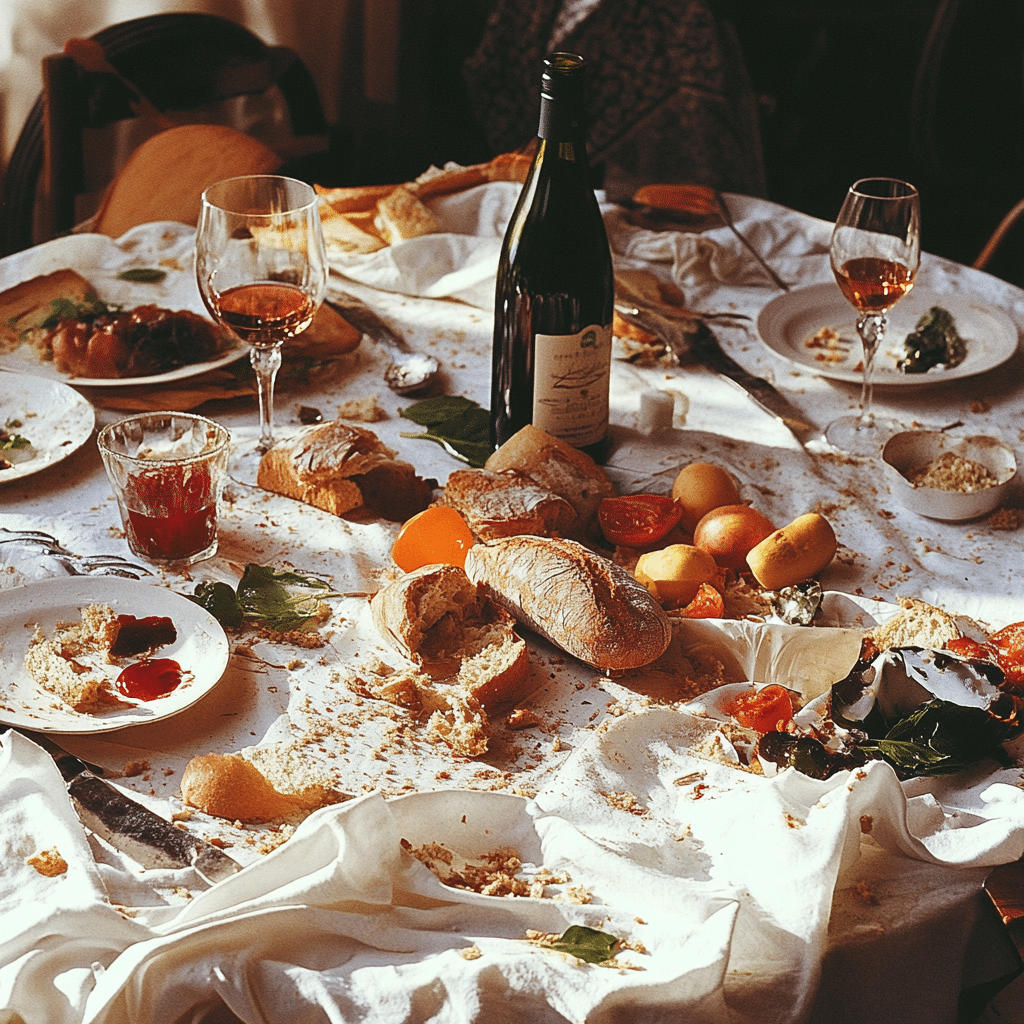
How about I tell you a bit more about myself? I mean, if this were a dinner party, that’s what I would do next, right? You would ask me if I liked red or white. I would say “wet.”
Then, I might tell you I teach Creative Writing at the University of British Columbia. My subject areas are Podcasting and Writing for New Media. I might confess, after a couple glasses, that I’m a little bit scared of my students — their brilliance, their judgement, their uncompromising vision. That I’m worried about their futures – how will they learn to recognize their own voices as writers when they are constantly being handed shortcuts?
“Yes, please, I’d love some more mashed potatoes.”
I’d also tell you that, in a perfect example of human contradiction, I am currently developing a virtual reality poetry “funhouse” that is powered by AI solutions.
“You don’t say!”
Feeling emboldened, I might mention that I’m the co-founder of a podcast company that works with brands to create authentic, moving stories.
Silence. Someone drops a fork.
You clear your throat and look a bit uncomfortable.
Meaning, you now wish to distance yourself from this conversation. Probably because you believe brands have nothing valuable to say. Or rather, that everything they say has a dollar value attached to it. That nothing they say is unencumbered by the need to sell you something. You might be worried that I am trying to sell you something right now, or even that my words here are chosen for their SEO value – not their actual value.
If I’m trying to sell anything at all – it’s the value of words for their own sake. For their ability to connect us. As human beings, we need this. Brands – and the people who work for them — are not immune to this need.
But never mind all that. The word “brand” is loaded and that’s just the way it is. And look, if I’m feeling confident, I might tell you (with my mouth still full) that I’m incredibly proud of this little company that I built with my business partner Roger, through a pandemic, through loved ones with cancer, through children growing up, through a new garden bed going in, a drought, a wildfire season, and most recently, through clear and present threats to the stability of what I used to think was an irrepressibly healthy market south of the border. I care deeply about this business, even though I sometimes have trouble defining it.
I can hear you thinking: “What even is a podcast in this day and age? Is it just a glorified YouTube Video? Or a TV talk show with bad production value?”
You might wonder if I am a Joe Rogan fan who doesn’t believe in fact-checking. You might wonder if you should avoid talking politics with me. You might wonder if I’m going to get all sanctimonious about the latest episode of This American Life. You might worry I’ll judge you because you can’t operate the podcast app on your phone.
I assure you I am just trying to eat these potatoes. They are delicious.
I would like to take this moment to offer some podcasting advice, and explain to you that podcasting is, more than anything else, an inclusive art form. It has its roots in portable, immersive, screen-free audio storytelling – and for many – that’s where it still belongs.
But more recently, it has migrated to video platforms such as YouTube, and man-spread itself across countless couches, conversations, questions, even elections. True – a lot of podcasts aspire to be some version of The Joe Rogan Experience. Podcasting is an accessible, “authentic” form of communication with very few barriers to entry – but it is also a deep pool, with diverse audiences, and a wide range of styles, genres, and levels of skill involved.
The work I do, specifically, is called brandedpodcasting. Branded podcasting contributes to brand identity, and at the same time — pulls threads from the “beleaguered sleeve” of journalism. It’s the connective tissue between a brand and its potential customers – aka its audience.
Looking at me sideways, you’re thinking: “Branded – as in seared with a brand? As in owned. As in not free to say what needs to be said?”
Yes, yes, quite right. You are right to be suspicious. Because it’s true that lots of brands like to control messages and present boiled-down, simplified, or one-sided content. Then again, major media companies are also brands, and they too have mandates that govern their slant, their “no-go zones,” and their styles. Even minor media influencers operate within their brand guidelines: Cat trainer with ADHD who plays the xylophone. Crystal healer with a penchant for D&D Lore. Homeschooling Christian mom. Stylist who is very proud of her houseplants. It seems nobody is without an angle these days. This is the world – the media landscape — we have built. I am only trying to tell stories that resonate, some true and some made up on purpose — within it.
My question to you today is: Is this enough? What is the value of human-to-human storytelling – in an ever-widening sea of artificial intelligence, lies, and misdirection? And how much does the process of putting these stories together still matter? Do things like integrity, fact-checking, diversity of voice, or on-the-ground reporting matter to you? I sincerely want to know.
I can see you edging away now. I sense that if I bring up AI again, it will all be over between us.
Ok look, I’ll wrap it up before dessert.
Personally, I think the value of the creative process itself, and of original, “authentic” content is high and getting higher.
Let me put it to you this way. If you have a choice between a sweater knit by a machine, and one knit especially for you by someone who loves you, which one is more meaningful? If you lose your father to cancer, what’s more valuable: Fifty AI-generated notes from internet strangers? Or one meaningful podcast episode about grief with someone who has been there?
The smart brands — the ones I like to work with — recognize the power of human-to-human connection that occurs within the ecosystem of real podcasting. They understand that podcasts are tools for community building, and that good podcasters are like truth-seeking missiles, no matter what genre they’re working within. Good storytellers are driven by an unseen force to discover, reflect, and connect. They instinctively understand things like rhythm, pacing, and character development. They are structure geeks – bent on telling a story in ways that keep you occupied, engaged, and entertained – so that you can learn and absorb better. So that you connect, and care.
Real storytellers labour and practice, sweat and curse, and through this arduous process they produce “real music in a sea of shit.” What do I mean by that? Don’t worry — you’ll know it when you hear it.
Hey… is there any wine left?