
The first time I heard The Dark Side of the Moon properly was on a high school field trip.
In the late 1980s, one of our more counter-culture-leaning teachers took a group of us to a Pink Floyd laser show at Vancouver’s H.R. MacMillan Space Centre. We filed into the domed theatre, leaned back in our seats, and watched planets, prisms and shifting colours pulse along with the music.
It felt incredibly profound, the way Pink Floyd often does when you’re sixteen.
I remember staring up at the ceiling, convinced that something very important was happening.
The Dark Side of Fifty
Four decades later, I found myself thinking about that night again.
These days, I co-run a podcast company, and much of my professional life involves helping organizations figure out the shape of the stories they want to tell. I spend a lot of time thinking about narrative structure: how ideas unfold across episodes, how themes accumulate, and how a series develops enough momentum that an audience wants to keep following it.
So when I heard that Vancouver’s H.R. MacMillan Space Centre was marking the fiftieth anniversary of The Dark Side of the Moon with a full-dome immersive experience, I couldn’t resist.
I was curious what the record might feel like from the other side of life.
From the dark side of fifty, you might say.
So I gathered a few friends and returned to the same domed theatre where a teenage version of me had once sat staring up at swirling colours and cosmic imagery.
The Power of a Concept Album
What struck me most once the show began was the stillness in the room.
Hundreds of people of all ages sat quietly beneath the dome, following the music and visuals as they unfolded. The album moved forward patiently, deliberately, each track leading naturally into the next.
The Dark Side of the Moon is one of the best-known concept albums ever recorded. Each song can stand on its own, but the record is designed to be experienced as a whole. Themes introduced early in the album echo later in different forms. By the time the final track arrives, the listener has travelled through something that feels like a loose but intentional arc.
Concept albums still exist, of course. But they feel rarer today, in an era when music is often consumed one track at a time.
When they work, however, they reward sustained attention.
When Creative Disciplines Work Together
Walking out of the theatre afterward, I thought about how what we had just watched was truly the result of several creative disciplines working together over time.
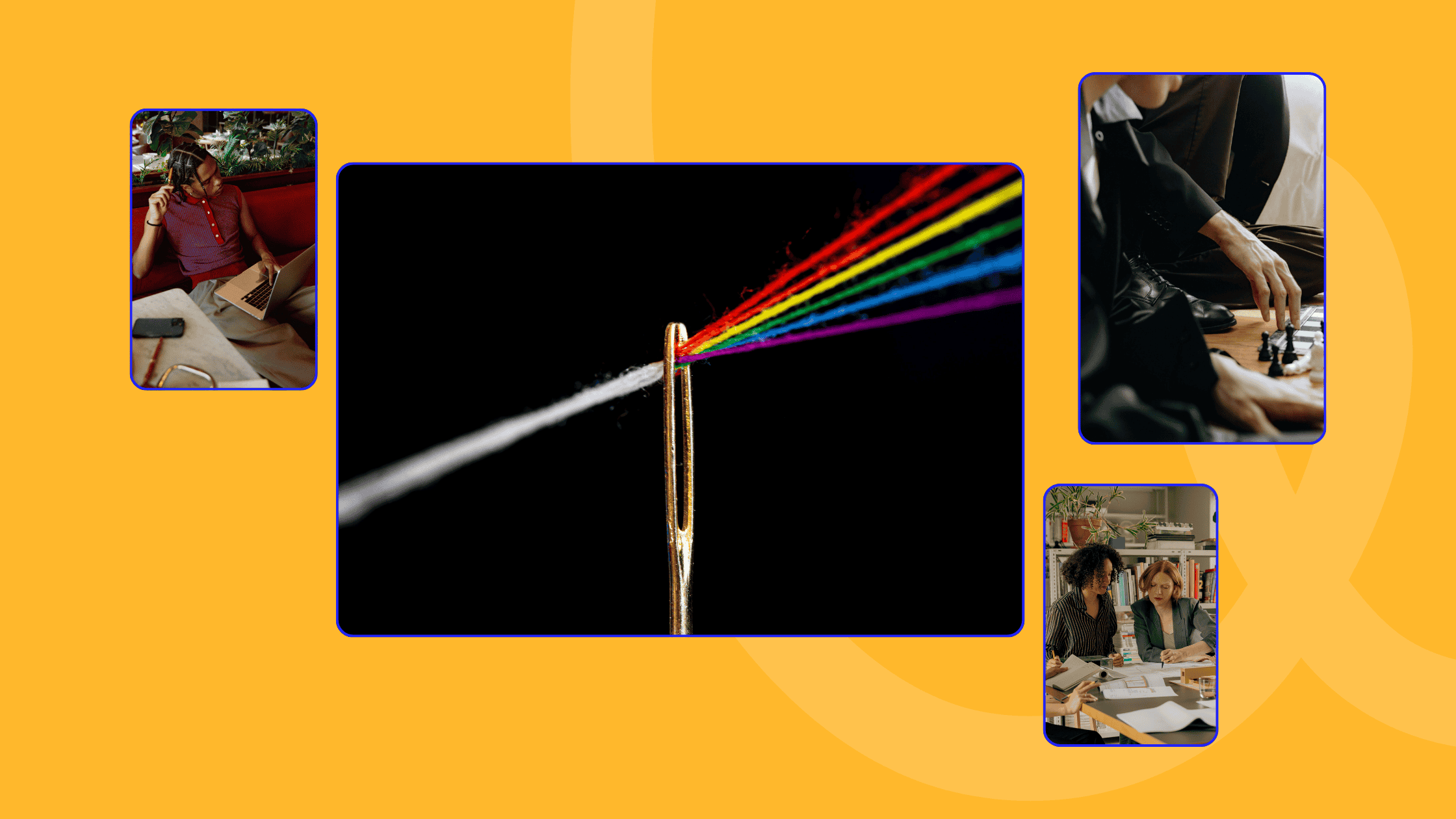
Pink Floyd brought the music. Visual designers extended the experience into light and motion. The album’s iconic prism cover was created by the design collective Hipgnosis, led by Storm Thorgerson and Aubrey Powell, with artwork by graphic designer George Hardie. Decades later, Powell collaborated with immersive media artists to translate the album into the full-dome planetarium experience we had just seen.
The music was the foundation.
But the experience became something larger because many different kinds of creative professional expertise came together to shape it.
A bit like the multi-talented team it takes to build a good podcast.
The Difference Between Content and a Podcast Strategy
When organizations first start talking about launching a podcast, the conversation usually begins with intentions.
They want to create content.
They want their CEO to share ideas.
They want to reach audiences in new ways.
All reasonable ambitions.
But they are not yet a show.
They are intentions.
Content is simply material: interviews, conversations, commentary. Podcast strategy asks a deeper question: what is the idea that holds all of this together?
Without that guiding idea, a podcast tends to become a sequence of interesting but loosely connected episodes. Each conversation might be enjoyable on its own, but the audience has little reason to return week after week.
Strategy introduces cohesion. Pacing. A reason to listen, episode after episode.
It identifies the perspective of the show, the audience it serves, and the larger question the series is exploring.
Finding the Red Thread of a Podcast Season
One way to think about this is through the same metaphor that hovered above us in that dome.
Think of each episode as a standalone track, with its own arc and energy. But think of the season as a concept album. Each piece can stand on its own, yet together they carry the listener through a larger idea.
Even the most interesting individual ideas will struggle to hold attention if they are not connected by a larger thread, what storytellers sometimes call the red thread running through a season.
When that thread becomes clear, everything else starts to align. The host’s role sharpens. The guest list becomes more intentional. Episode order starts to suggest itself, and a season begins to build momentum rather than appearing as isolated conversations.
The show starts to come together around this central theme.
The Moment the Concept Clicks
Finding that red thread rarely happens all at once. It takes time, unfettered ideation, and open curiosity – a commitment to the “creative process.”
Sometimes, a central show concept will appear in the middle of a brainstorming conversation.
Someone asks a question that reframes the audience. Someone suggests a guest who suddenly embodies the idea. A client hears the shape of the show for the first time and says something like, “Wait — so the whole season is really about that?”
You can feel the shift when it happens. Occasionally, the right idea will give you goosebumps.
People sit forward. The conversation accelerates. The podcast stops feeling like random, disparate content.
It starts to feel like a show.
The Shared Terrain of Creativity
Toward the end of The Dark Side of the Moon, there is a lyric that lingered with me as the final track approached that evening.
“I’ll see you on the dark side of the moon.”
The album spends forty minutes exploring the pressures that shape human life: time, money, conflict, mortality. The lyric acknowledges that everyone eventually encounters those forces.
The dark side, in other words, is not some distant place.
It is simply part of the shared terrain of being human.
Creative work has its own version of that terrain. Every new idea begins in uncertainty. For a while, it floats in space where the answers are not yet clear, and the shape of the story has not fully revealed itself.
But when the right storytelling collaborators are in the room, that uncertainty becomes something else.
It becomes a shared exploration.
And eventually, like the lights in a planetarium aligning perfectly with the music, the idea reveals itself, and your show is ready to take off.